Creasy–Fossella conflict
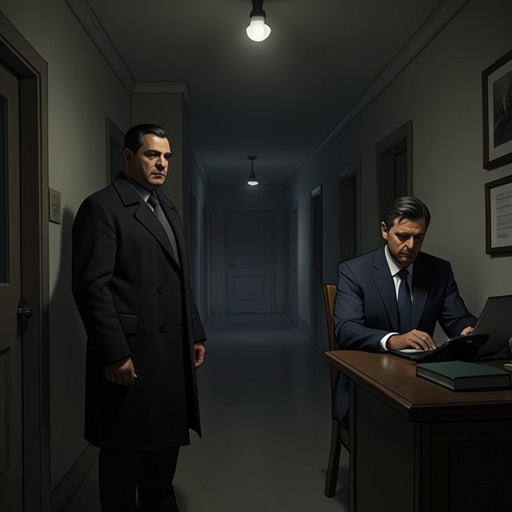
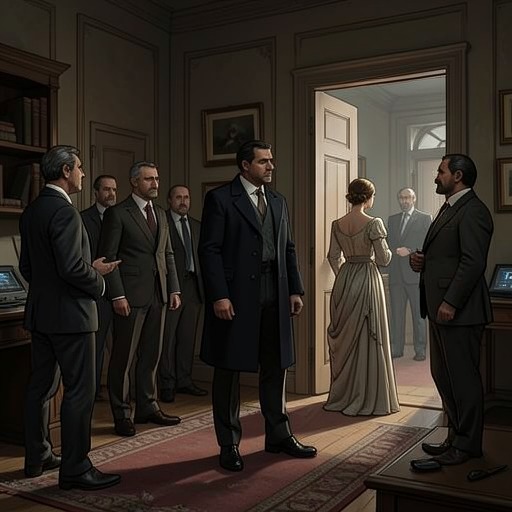
Man on FireThe Creasy–Fossella conflict develops as an investigation into who ordered the Balletto kidnapping and who bears responsibility for the girl’s death. Creasy does not begin with a direct confrontation with Fossella. Instead, he maps the criminal hierarchy, identifies the men closest to the kidnapping, and seeks information from Giorgio Rabbia. Rabbia’s account connects Fossella to the consequences of the crime, but the evidence here distinguishes that connection from a direct confession that Fossella ordered the kidnapping.
Criminal Chain and Responsibility
Creasy explains the structure he believes he is confronting: Fossella and Abrata are the two principal bosses in Milan, and Fossella pulled the kidnapping. Giorgio Rabbia and Sandri stand ahead of Fossella in Creasy’s planned sequence of targets. Floriano Conti, based in Rome, would receive a share, while Don Cantarella in Palermo takes a portion of everything. In Creasy’s account, the killing has now entered the same chain of responsibility as the kidnapping: Cantarella, too, gets a piece of it.
That explanation places Fossella neither at the bottom of an isolated crime nor at the top of the entire organization. He is a local boss whom Creasy identifies as having initiated the kidnapping, within a system that distributes proceeds upward and outward. The hierarchy helps explain Creasy’s method: he means to work through people linked to the crime before reaching the more powerful figures. It also gives the conflict a wider scope than a personal pursuit of one man, since Creasy understands the kidnapping and killing as parts of an organized arrangement.
Creasy’s Plan
Creasy intends to drive to Milan and reach a cottage early the following morning. Rabbia and Sandri are his first targets, but he expects to need a conversation with only one of them, probably Rabbia. He judges Rabbia to be muscle rather than a decision-maker and expects him to break more quickly than Sandri. The plan therefore rests on a practical distinction between the two men: both are early targets, but Creasy expects Rabbia to be the more readily usable source of information.
This approach makes the conflict investigative as well as retaliatory. Creasy is not simply moving toward Fossella; he is trying to establish what happened by questioning men closer to the kidnapping. His earlier outline already places Fossella in the chain, but Rabbia’s account can clarify Fossella’s response to the girl’s death and the arrangement surrounding the kidnappers’ expected payment. The order of the pursuit is deliberate: Creasy seeks information from a subordinate before acting against the boss he holds responsible.
Rabbia’s Interrogation
Creasy opens the questioning by returning to the Balletto kidnapping. The questions continue for more than an hour. Rabbia hesitates only when the subject turns to Fossella; when the questioner lays down his pen and begins to rise, Rabbia’s answers start flowing again. The pause and renewed disclosure mark Fossella as the sensitive point in Rabbia’s account, although the exchange does not establish precisely why Rabbia hesitates.
Asked what Fossella thought of the girl’s death, Rabbia says Fossella was angry and regarded it as a mistake. He also says the kidnappers were supposed to receive ten million lire each, but Fossella gave them nothing. Creasy tests the implication by asking whether the stopped payment was their punishment; Rabbia nods. The detail gives Creasy a concrete account of Fossella’s reaction and of the failed payment, while Rabbia’s wording presents the death as an error within the kidnapping rather than as an intended outcome. The account supports Creasy’s pursuit of Fossella’s responsibility, but it does not, by itself, prove that Fossella ordered the killing.
Sandri and the Limits of the Account
Rabbia adds that he and the others were lucky because Sandri is Fossella’s nephew, his sister’s son. The family relationship gives a specific explanation for why Sandri may have been protected from the consequences that followed the unpaid promised share. Creasy’s response turns the disclosure back toward the planned questioning: after acknowledging that the men were lucky, he directs the conversation to Sandri. The interrogation thus shifts from Fossella’s reaction and the withheld payment to the family connection that may have affected how the participants were treated.
The conflict’s immediate shape is therefore an accumulating case rather than a completed reckoning. Creasy identifies Fossella as the person who pulled the kidnapping, pursues information through Rabbia, and learns that Fossella was angry at the girl’s death while withholding the kidnappers’ expected money. Rabbia’s disclosure also places Sandri inside Fossella’s family, complicating the apparent order of responsibility. These details sharpen Creasy’s case against Fossella, but the account presented here ends with the inquiry still turning toward Sandri, not with a reported confrontation or final outcome between Creasy and Fossella.